
Previous Euclid Residents by Era
A Euclid backward address trail changes sources as it moves through time. Euclid recorded deeds can identify parties to a transfer. Euclid directories and census material can place a household at an address in a published or enumeration year. Euclid tax, map, and permit material can test what happened to the property itself. The table keeps those uses separate, which prevents an owner, a directory listing, and a permit applicant from being treated as the same kind of evidence.
| Source | Years It Covers | Where Held | What It Shows |
|---|---|---|---|
| Recorder deeds and instruments | 1810 to present, county statement | Official Records Search, counter, or request | Recorded parties, instruments, dates, parcel and legal clues |
| MyPlace Transfers | Current portal; parcel depth varies | Cuyahoga County MyPlace | Transfer date, parties, deed type, volume/page, and transfer metadata |
| Euclid directories | 1928, 1942, selected 1947 to 1963 years, and 1976 | Euclid Public Library / Internet Archive | Published name and address context for a particular year |
| Federal census | Released on a 72-year schedule | National Archives and library databases | Household snapshot for the census year |
| Tax and map records | Tax records about 1819 to 1986; map runs vary by series | Cuyahoga County Archives and Fiscal Office Map Room | Owner and value transitions, parcels, and changing property context |
| City permit files | No continuous online series established | Euclid permit-office request channels | Project address, work, date, and supplied owner/applicant details |
Start with MyPlace when the present Euclid address is known. Use the Recorder once the Euclid parcel or transfer details are in hand. For an older Euclid household question, put a directory year beside the closest available census year. For a Euclid building-change question, bring the address, parcel, and approximate date to the city or Archives rather than assuming a portal covers the era.
Cuyahoga County’s Recorded Documents page describes the deed-index access route.
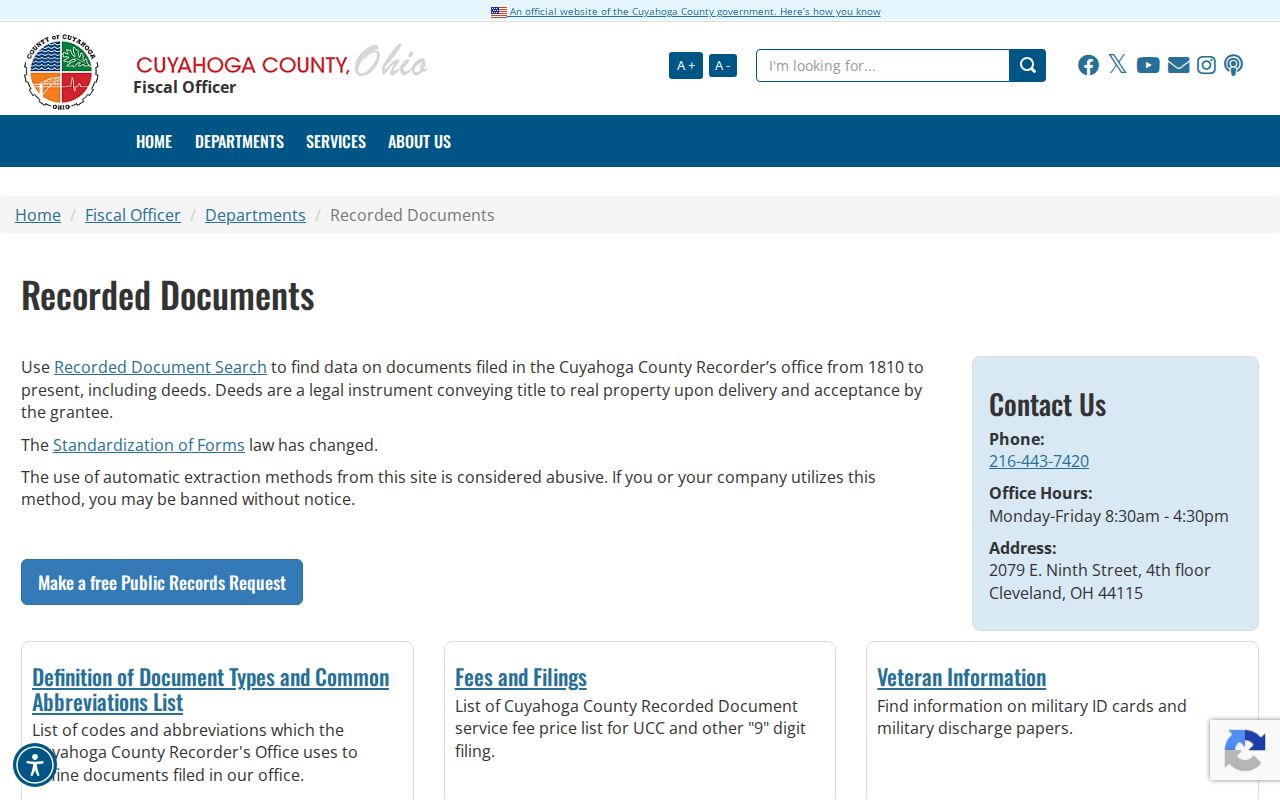
The county states that the online Recorder search reaches documents filed from 1810 to the present. That coverage is an index-access statement, not a guarantee that every address question resolves with one document.
Trace Euclid Deed Records
The Euclid title trail should begin with the property, not a surname alone. MyPlace accepts City plus Owner, Parcel, or Address. For a Euclid address, choose the city when useful, select the parcel, and preserve the Euclid parcel ID and legal description with the address. The selected parcel’s Transfers area can show transfer date, deed type, grantor, grantee, volume/page, and other transaction fields. That gives the bridge from a modern Euclid property card to the Recorder.
- Search the street address in MyPlace, set City to Euclid if helpful, and open the matching parcel.
- Record the parcel ID, current description, legal description, and the relevant transfer details. Review Transfers before drawing a conclusion from an owner name.
- Use Get a Document List, then move to Official Records Search with the parcel, volume/page, address, or party information.
- Find the prior Euclid owner’s acquisition as a grantee, then search that former grantee as a later grantor to locate the later sale. Repeat the Euclid link backward one recorded transfer at a time.
- Check the parcel, legal description, document date, and volume/page at every step. A common name, changed address, or multi-parcel property can break a chain built from names alone.
- Grantor / grantee
- The grantor is the party conveying an interest in a recorded document. The grantee is the party receiving it.
- Chain of title
- The linked sequence of recorded ownership documents for a property, traced from one transfer to the earlier one.
- Legal description
- The recorded land description used to identify the property. It can be more stable than a street address in older records.
Cuyahoga Transfer and Recording is the county office responsible for land-interest documents, plats, and parcel creation.
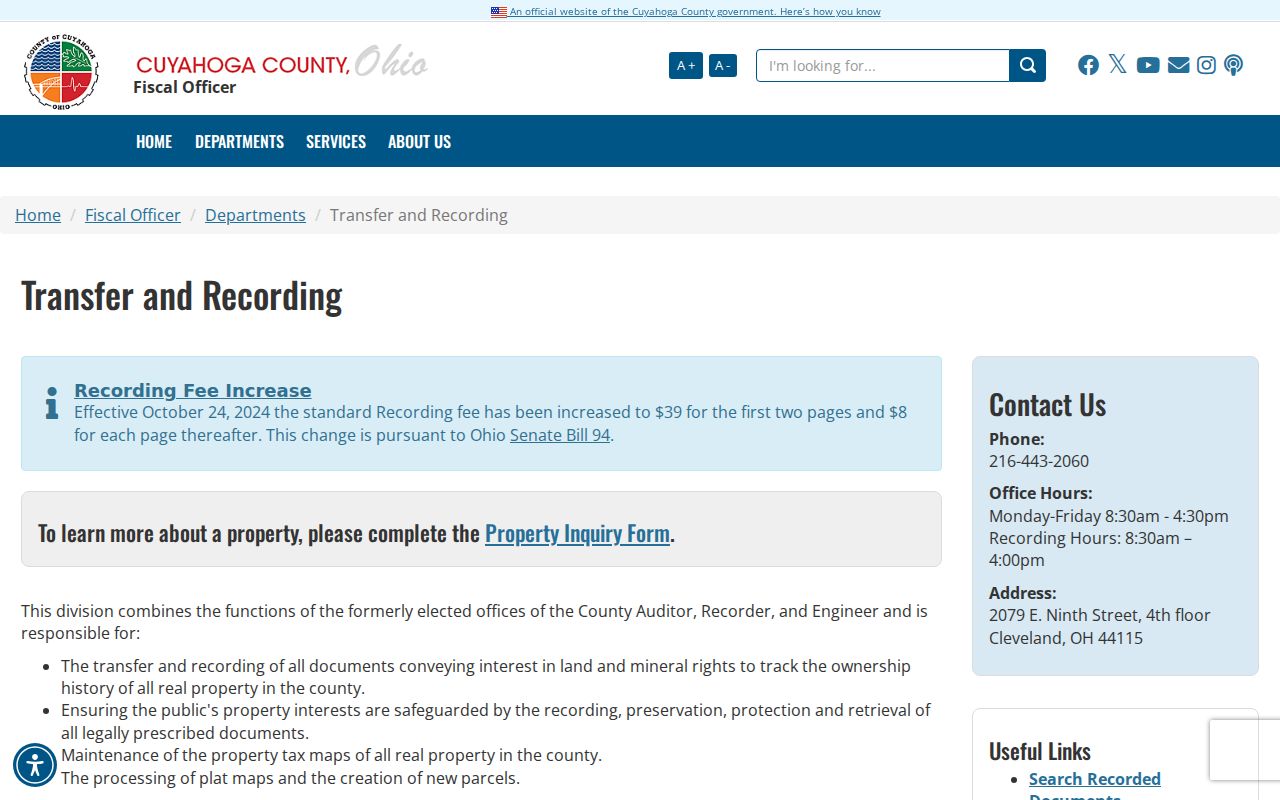
Its public index is free to use. A copied recorded instrument is listed at $2 per page, with an added $2 certification charge. Verify a current fee with the office before requesting or filing documents.
Euclid Transfer Safeguards
MyPlace’s Euclid Transfers information is a starting point, not the final official record. The county describes MyPlace as a free public service and directs users to original documents or the source office for authoritative material. One inspected Euclid parcel reached 1985, but that was a sample parcel rather than a countywide historical cutoff. A Euclid transfer date can also describe an ownership event without proving who occupied the address.
Use the Recorder’s advanced search when a Euclid name match is uncertain. Its visible criteria include party names, grantor, grantee, date ranges, document type, parcel ID, volume, page, property address, and several legal-description fields. A Euclid parcel ID may include dashes. The available combinations make it possible to test a proposed Euclid link instead of relying on a surname match.
Euclid Household Directory Pairing
Ownership is only one part of finding previous Euclid residents. Euclid Public Library’s digitized directory run includes 1928, 1942, Cleveland Directory Company volumes for selected 1947 to 1963 years, and a 1976 city guide. Those Euclid volumes are published snapshots, so compare the entry with its own year instead of treating it as a continuous roll. The Euclid city directory contains the collection detail and access links.
- Search the applicable directory year by the historical street name and then by surname. Save the printed address exactly as it appears.
- Match that directory year to the nearest released federal census schedule. Census material can provide a household snapshot, while the directory supplies a local published address clue.
- Compare names, street form, and timing against the deed trail. Keep uncertain spellings or conflicting house numbers as notes, not as forced matches.
The Euclid library also provides genealogy resources such as census databases, obituary indexes, yearbooks, and in-library Ancestry Library Edition. Each has its own access terms and coverage limits. A Euclid directory entry does not establish ownership, and a Euclid census household does not prove a recorded transfer.
Euclid Maps by Record Era
Historic Euclid property research changes keeper by era. The County Archives property guide identifies original map volumes around 1860 to 1945 at the Archives, with 1945 to present material at the Fiscal Office Map Room. It also points to Euclid tax records around 1819 to 1986 at the Archives, county-suburb atlases from 1852, 1874, 1892, and 1903, and tax maps from 1860, 1870, 1880, and 1890.
| Property layer | Era | Best next stop |
|---|---|---|
| Original map volumes | About 1860 to 1945 | County Archives |
| Original map volumes | 1945 to present | Fiscal Office Map Room |
| Tax records | About 1819 to 1986 | County Archives |
| Tax records | 1987 to present | Online or Fiscal Office channel |
A Euclid valuation increase may help date a structure when compared with tax duplicates. It is still a clue, not a construction-date finding. The guide specifically warns that street names, property dimensions, and descriptions can change.
Euclid Permit Chronology
A Euclid city permit file can add a dated project event to a house history. Euclid’s Residential General Building Permit uses a Euclid project address and asks for property-owner, contractor, and applicant information, plus project type, dimensions, cost, work description, and a site plan. Those fields show that a permit can attach a person or organization to a Euclid project. They do not prove everyone who lived at the address.
When requesting a historic Euclid city file, identify the address, permit type, and approximate date. Euclid directs permit requests or submissions through its published permit contact route. The general Euclid city records route is also available under Ohio R.C. 149.43, with police, court, and fire records directed to their separate contacts.
Cuyahoga County’s public-records FAQ explains the custody split for several historical record types.
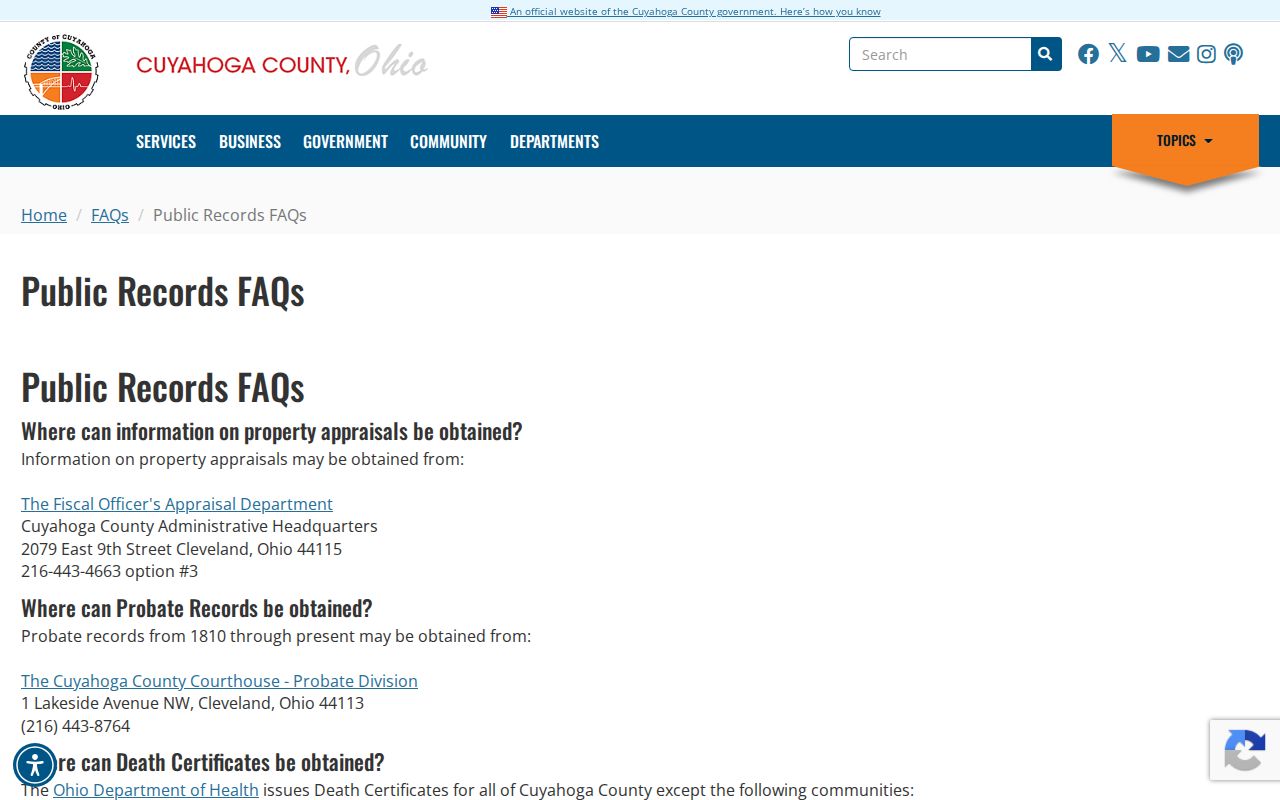
The correct custodian depends on both record type and date. That is why a focused request works better than asking one office for an undifferentiated house-history file.
Euclid Bliss Road Search
One local street-name bridge is documented, not inferred. The 1928 Euclid directory calls East 222nd Street formerly Bliss Road. Search both Bliss Road and East 222nd Street when moving across 1928-era sources, then compare house number, street endpoint context, parcel information, and legal description. This protects the chain from a false break caused by a changed street label.
No official source reviewed established a general Euclid renumbering date. The Bliss Road notation is useful precisely because it is a specific published clue, not a reason to assume all Euclid street names changed in the same way.
Euclid Archives Appointments
Cuyahoga County Archives is the Euclid fallback when online documents, current property data, or local directories do not reach the needed era. The Archives is at 3951 Perkins Avenue in Cleveland and receives research requests by appointment, email, mail, and counter access. Euclid property research expressly requires an appointment. A detailed request should name the record type, Euclid address or parcel, surname where relevant, dates, and any volume/page or petition number already found.
The County Archives access page explains its holdings and request procedure.
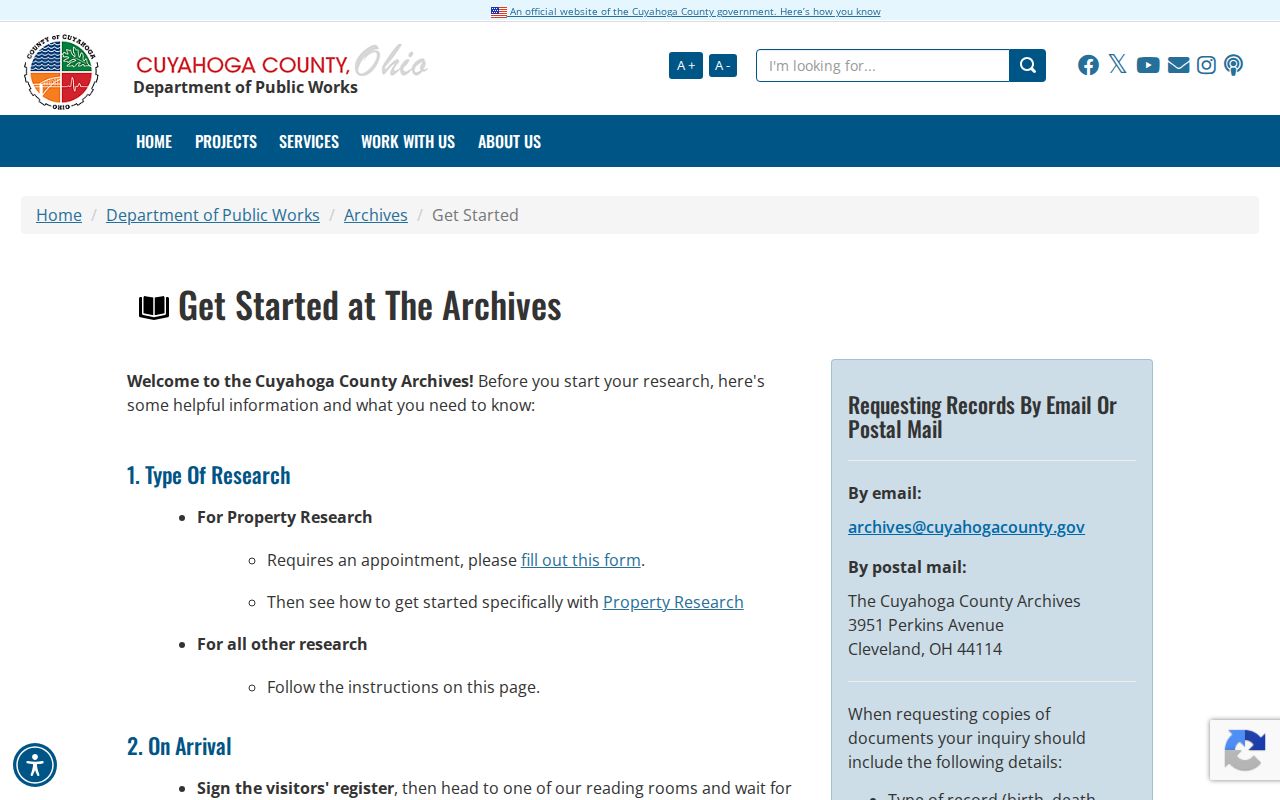
At the reading room, staff assist one person at a time and up to ten volumes or documents can be requested. The first 40 photocopies are free, then copies are three cents each. Fully detailed requests receive a response within three weeks, according to the county.
Euclid Probate and Obituary Leads
When an Euclid property owner disappears from a later transfer trail, probate and death material can provide a separate historical lead. Probate files can identify an estate or fiduciary, but a recorded transfer should not automatically be labeled an inheritance. The Cuyahoga Probate docket and copy process should be used to locate the case and obtain the actual court material.
Ohio History Connection’s death index covers Ohio Department of Health deaths for 1913 to 1944 and 1954 to 1970, with stated gaps between those ranges.
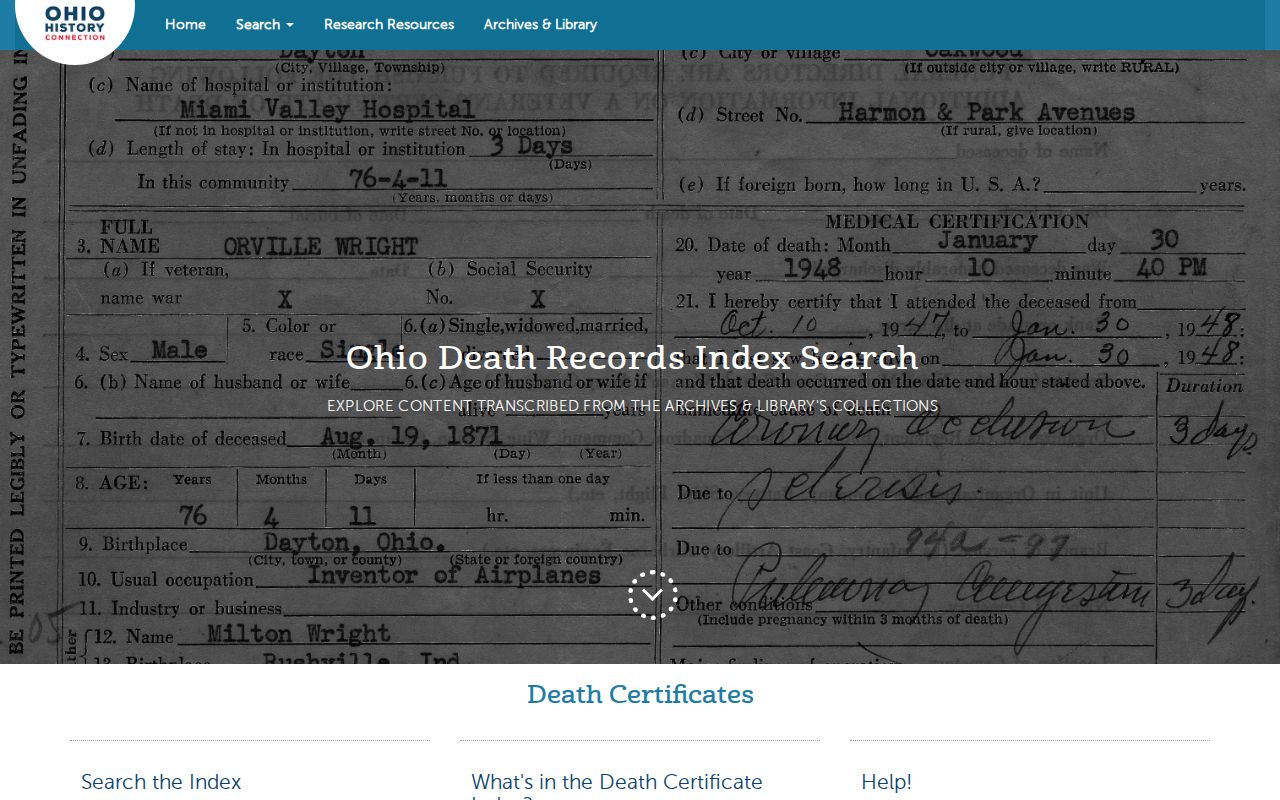
A failed death-index search does not prove that no death record exists. The index is a historical lead, not a certified-copy service or proof of an address.
Cuyahoga Probate Court’s online gateway leads to the docket and court information.
The county FAQ identifies Probate records from 1810 to the present. Use the court’s case number and copy procedure rather than assuming a docket entry supplies the full record.
Euclid Previous Residents Limits
Euclid house-history and family-history research is strongest when it stays tied to the property and the date. Recorded owners are not every occupant. Directories are published snapshots, permits identify project participants, and historical sources have stated gaps. Safe at Home and other legal protections can also affect what is publicly accessible.