
Euclid Neighbors by the Block
Public Euclid sources answer different questions about Euclid neighbors. A parcel map shows the lots that touch a starting address. The Cuyahoga County property record can connect a selected Euclid parcel with its recorded owner and transfer trail. A Euclid city permit file can document work at one address, while an older Euclid directory can place a named householder there in its publication year. None of those sources is a current list of every person on the block.
| Block source | What it can show near an address | Access path |
|---|---|---|
| MyPlace map | Selected Euclid parcel outlines, parcel ID, owner, street address and market field | Address or parcel search, then View Map |
| Official Records Search | Recorded Euclid party and instrument trail for a selected parcel | Online index, counter or record request |
| Euclid city records | Euclid address-specific permit or departmental file when it exists | Specific public-record request |
| Ohio Voter Search | Public Euclid registration facts for a named person, subject to exclusions | Name and county lookup, then Board contact |
| Euclid directories | Historical Euclid name-and-address evidence for selected years | Digitized library collection |
A recorded owner can be a useful starting point, but it does not establish every occupant or the current status of any person. Keep the record type, date, parcel number and source together as the block trail grows. If the selected parcel has a deed question, the Recorder’s advanced form accepts property address, parcel ID, party, document type, dates and legal-description criteria. That is a document path for one selected property, not a way to build a resident roster for nearby homes.
Euclid Parcel Records Map Steps
The Euclid source-grounded method is deliberately small. Find the starting address in MyPlace, choose View Map, zoom in, and click one adjoining parcel outline at a time. The map pop-up can display the parcel ID, owner name, street address, city, ZIP and market field. Use that Euclid parcel ID to return to the property record or open its document list. The county did not verify a public radius or buffer tool, so an address-by-address walk is more accurate than claiming an exported neighbor list.
The City of Euclid history page supplies the local geographic background shown in this captured neighborhood view.
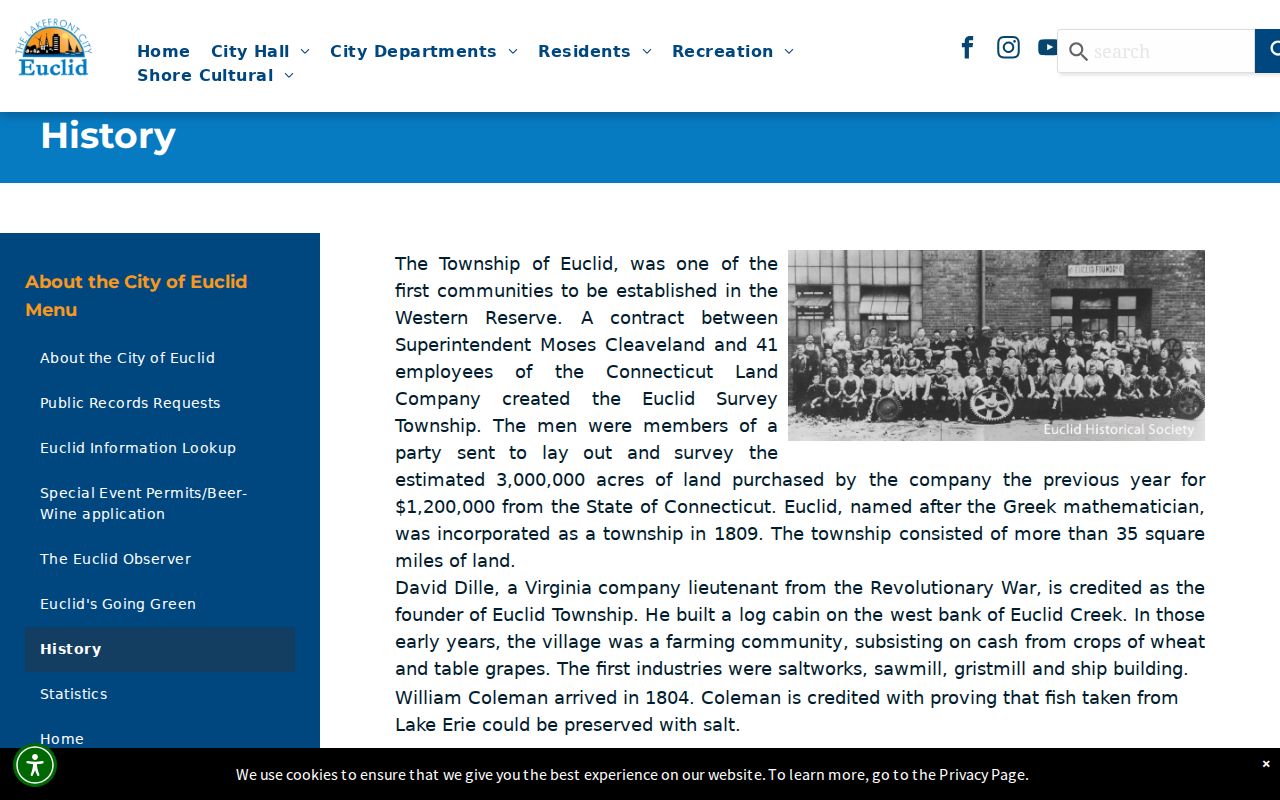
Once the starting parcel is pinned, compare only the adjoining shapes needed for the question at hand. That avoids treating a map as proof that all Euclid neighbors live at the displayed properties.
Map Euclid Records by Address
Start with the Euclid property, then let each record lead to the next one. The county’s map service documents Euclid parcel, road, imagery and municipal-boundary layers. Its useful neighbor method is clicking the next parcel, not scanning a whole street by surname. A parcel may have a mailing address that differs from its situs address, so neither field should be treated as proof that the named owner lives there.
- Enter the starting Euclid street address in MyPlace and select the matching parcel.
- Open View Map, zoom to the nearby outlines, and select an adjoining parcel.
- Record the Euclid parcel ID and property details for each selected lot before opening its transfer history.
- Use the Recorder index for a document trail, then stop when the question becomes a whole-street inquiry.
For a longer address chain along a named road, the Euclid street directory follows the broader parcel and recorder sequence.
Euclid Neighborhood Records Contacts
Euclid’s community layer offers ways to meet neighbors without presenting a public household roster. The City of Euclid Neighborhood Engagement program offers Neighbor Circles, help starting a group, speakers, city phone-list support and New Resident Packets. It describes community activities such as block cookouts, newsletters and garage sales, but it does not publish member names or street-by-street lists.
Neighborhood Engagement
Kristal Grida, Assistant to the Mayor for Neighborhood Engagement and Special Projects, is listed at Euclid City Hall with 216-289-8268 and kgrida@cityofeuclid.com.
Neighbor Circles
City staff can provide group-starting contacts, speakers, meeting ideas and New Resident Packets through 216-289-2786.
Heritage Park
The city names Heritage Park Community Association as a partner, but its cited program page does not publish a member directory.
The Euclid Neighborhood Engagement page provides the official contact route rather than a roster.
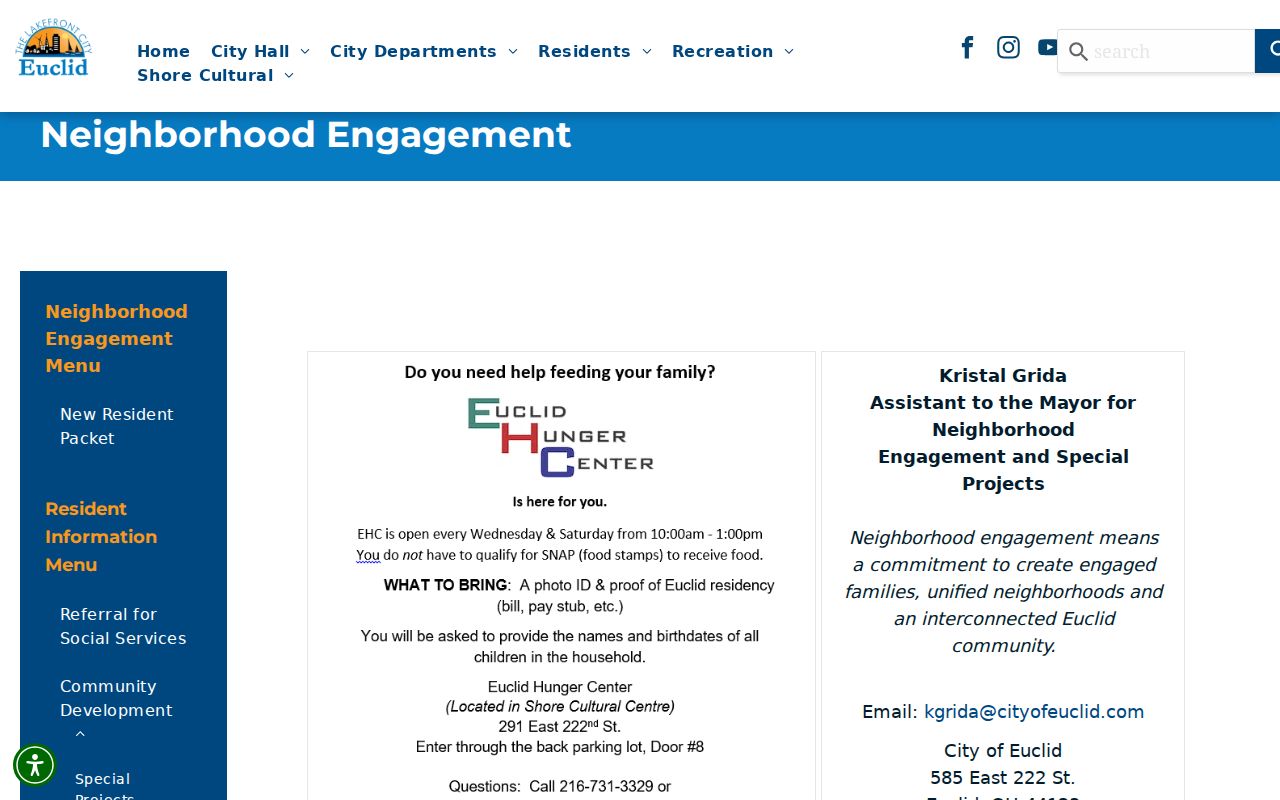
Use the published staff route to ask about participation or a program, not to request private lists of Euclid neighbors.
Euclid Voter Records, Not a Block List
Ohio makes registration records public subject to exclusions, but its public lookup is name based. The statewide form requires first name, last name and county, and may offer a street-name step to narrow a known Euclid person. It is not a map browser for a block. The Cuyahoga Board’s local tool uses last name and date of birth, with safeguards for protected records.
Safe at Home participants, protected public-service workers and other excluded records may not appear in the public data. Voting history describes participation and ballot type, not ballot choices. A failed lookup can reflect a mismatch, a former name, a different county, an older record or a protection. It does not prove that a person is absent from Euclid.
Note: A precise request to the Board can seek an existing public record, but the office need not create a new block-by-block report.
Official Euclid Records Compared
For a Euclid property question, official records show the source, date and record type behind a claim. Commercial neighbor tools can blend public and private data, yet their matching and update practices may be unclear. Treat that category only as an unverified lead, and return to the Fiscal Officer, Recorder, Euclid city custodian or library collection for confirmation.
| Official record route | Commercial neighbor claims |
|---|---|
| Shows a named custodian, parcel or document context, and access channel. | May combine data from several sources without showing the underlying record. |
| Can be checked against the original office, index or historical volume. | May be stale, merged with another person, or missing a source date. |
| Has record-specific limits, redactions and correction channels. | Does not replace a custodian’s correction process or protected-record rules. |
The right check is always the agency or collection that created the information, particularly before drawing a conclusion about a Euclid neighbor.
Euclid Address Records at City Hall
When the question is about work done at a nearby property, a city permit or inspection file may be more useful than a parcel screen. Euclid’s permit pages list general, electrical, plumbing, HVAC, point-of-sale inspection, fence and other applications, but the reviewed sources did not show an online historic permit search. A focused request should give the street address, permit type and approximate time period.
Euclid’s contractor-registration page is the captured local filing context; the permits page identifies the forms that can narrow an address request.
The record may include an owner, applicant or contractor supplied on an application, but those roles are not a list of neighbors or a statement of current residence.
Heritage Park in Euclid
Heritage Park Community Association is a concrete local geography clue, not a directory. The city describes its program area with the Cleveland border, East 219th Street, Euclid Avenue and railroad tracks. That published boundary can help place a community program in context, but it does not establish a complete neighborhood map or the homes of participants.
Euclid’s Lake Erie setting, major roads and changing industrial and residential eras also explain why a block can have several kinds of historical records. For older property context, Cuyahoga County Archives holds maps, appraisal cards, tax records and atlases by era.
The County Archives Advisory Commission information describes the public-access and preservation role behind that archival fallback.
Archive material adds an era-specific property story, while the current parcel map remains the better starting point for an immediate Euclid block.
Euclid Records Requests by Address
For a city-created address file that is not posted online, use the city’s public-records channel and name the department and record type. Euclid accepts a general request through its online form, Council office, email or verbal request. Its policy says a routine request should be produced promptly if feasible and otherwise satisfied or acknowledged within three business days, with estimated time, costs and exemptions for broader requests.
Police, court and fire-prevention records are routed to their separate contacts. That division matters because City Hall does not control Recorder documents, county property records or state voter data. Ohio’s Public Records Act, R.C. 149.43, governs access while allowing lawful redactions.
See the Euclid public-records policy before asking for a particular city file.
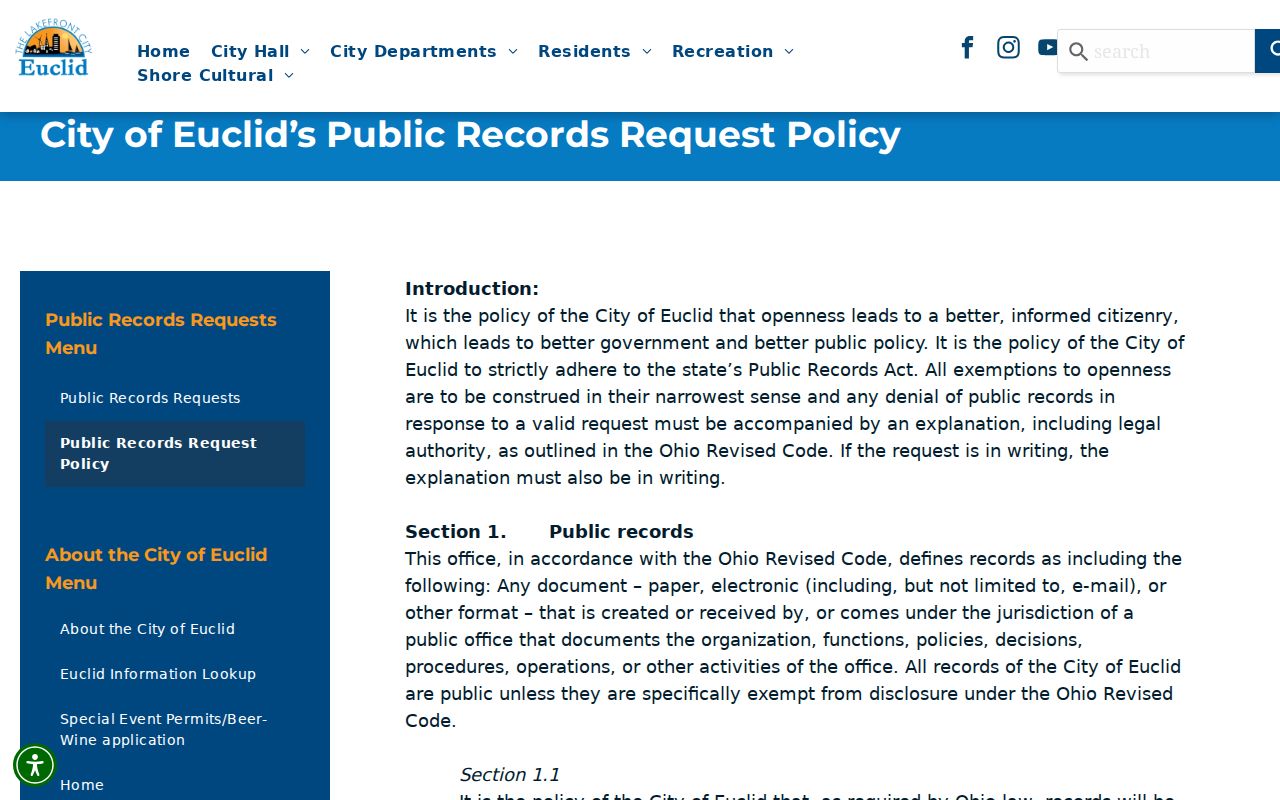
Giving the custodian an address and date range helps locate an existing file without asking the city to compile a new neighbor report.
Euclid’s 2025 Museum Proposal
Local history sometimes supplies the context behind a block, even when it does not identify a present resident. A November 2025 City Council agenda authorized an application for up to $50,000 in supplemental funds for work at the city-owned Euclid Historical Society & Museum. The same agenda referred to a proposed City, Society and Euclid Public Library resource and digital-library partnership.
The November 2025 council agenda describes an application and proposal, not a confirmed award, new collection or public neighbor directory. For a history question, verify the current access route with the actual museum, library or archive.
Euclid Neighbor Privacy Limits
A parcel result does not disclose every adult at an address, renters, utility customers, delivery recipients or protected people. Ohio Safe at Home can shield a participant’s identifying information in voter and certain property contexts. Motor-vehicle personal information is also restricted. A public record must be read within the limits of the custodian that maintains it.
Use a neighbor lookup for personal, lawful curiosity, a community connection or property research. Do not use any record to stalk, harass, monitor, intimidate or harm another person. Ohio law prohibits menacing by stalking and harassing communications.
Lawful use. Euclid neighbor records can explain parcels and community channels, but they are not permission to track or pressure any person.